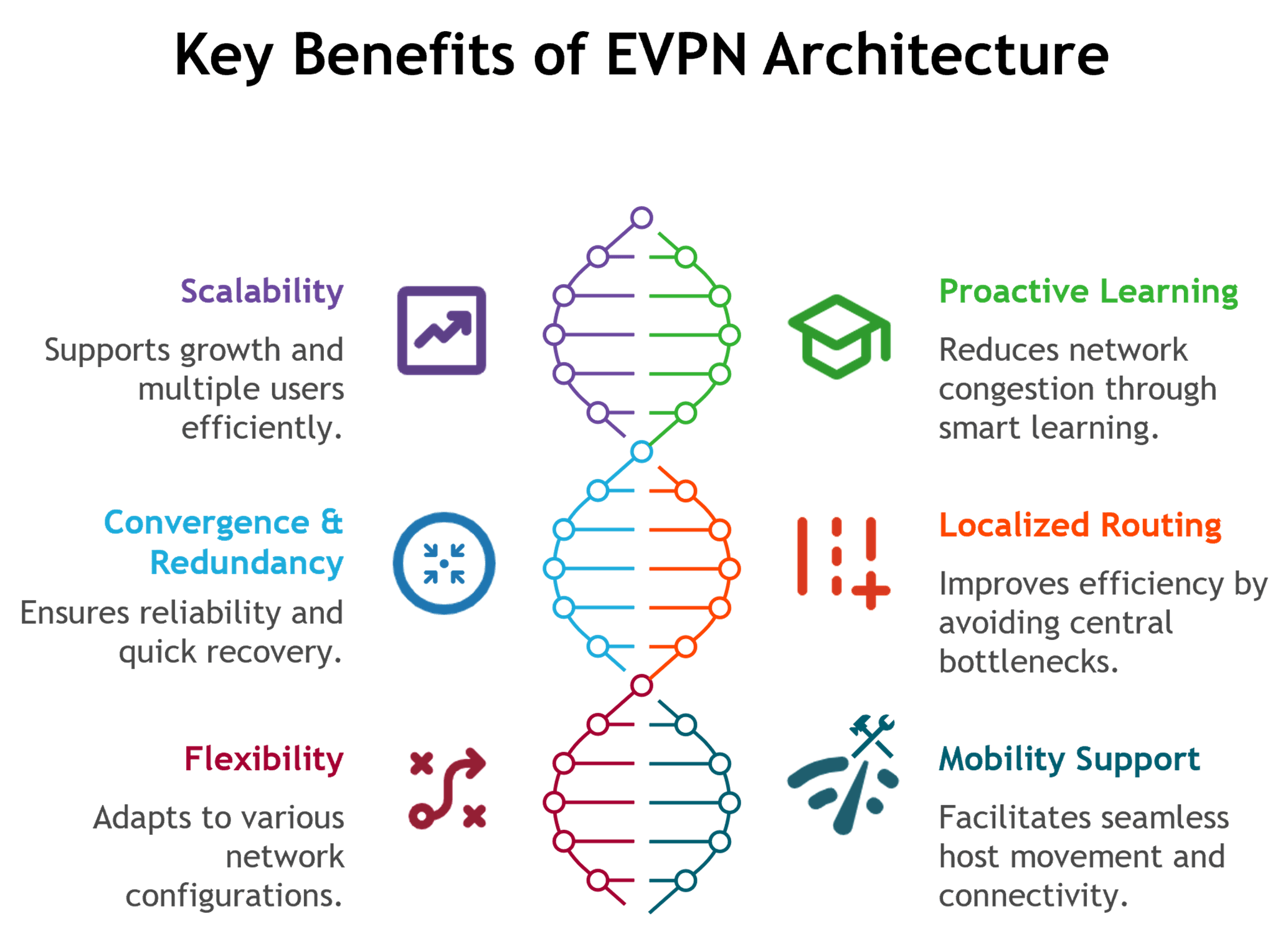
In modern data centers and large enterprise fabrics, legacy Layer-2 designs (flood-and-learn, spanning tree, static VLANs) struggle to scale, provide agility, or support multi-tenancy, mobility, and efficient east-west traffic. The AOS EVPN Architecture Guide outlines a reference architecture and design best practices for deploying MP-BGP EVPN on Alcatel-Lucent’s AOS platforms — a pathway toward more scalable, resilient, and operationally efficient networks.
MP-BGP EVPN: A Proactive Control Plane
EVPN (Ethernet VPN), via MP-BGP introduces a unified control plane for both Layer-2 and Layer-3 services over overlays.
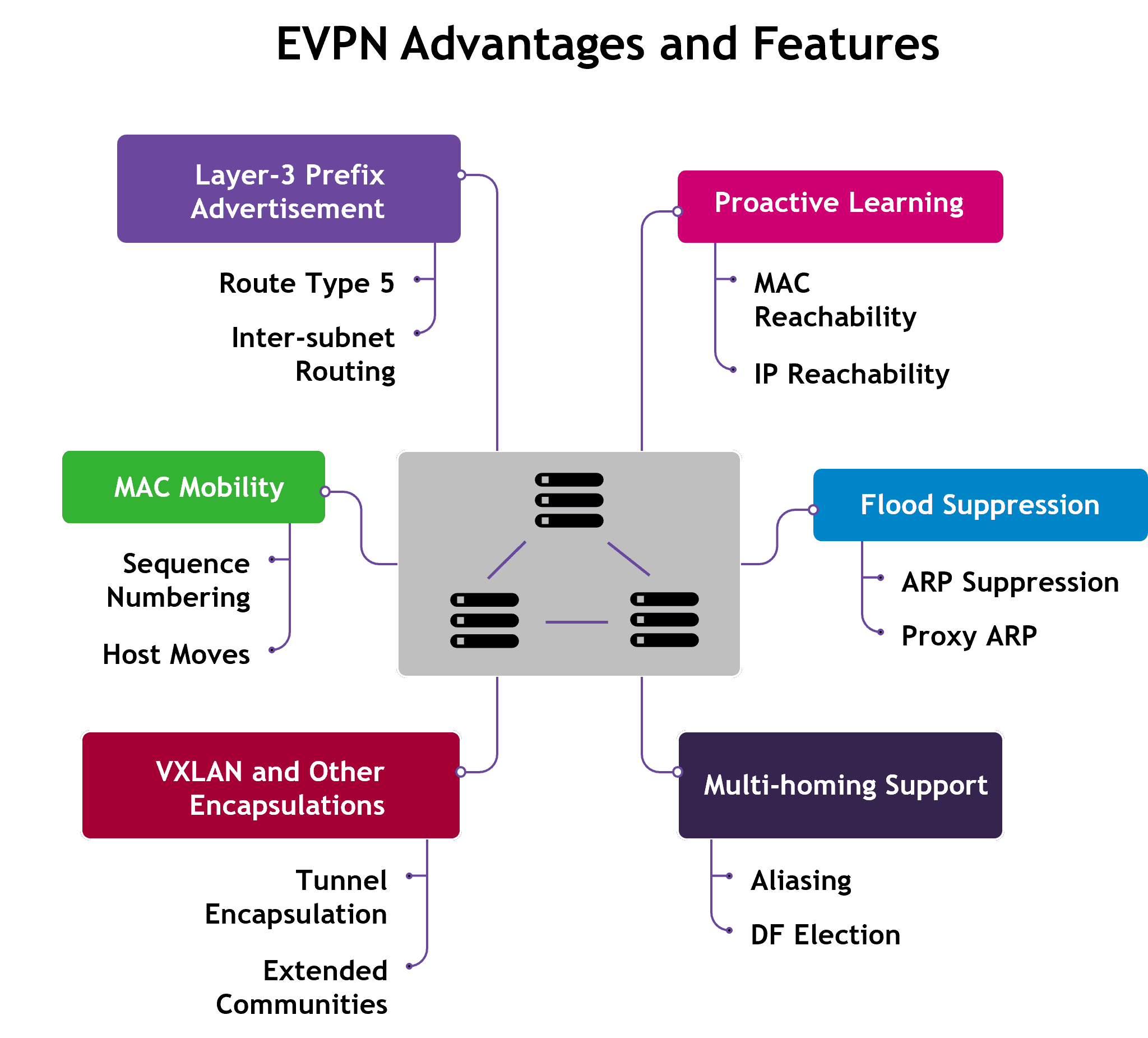
The guide lays out the primary EVPN route types (1 through 8) and their role in discovery, advertisement, multi-homing coordination, and multicast state synchronization.
Multi-Homing, Redundancy & Convergence
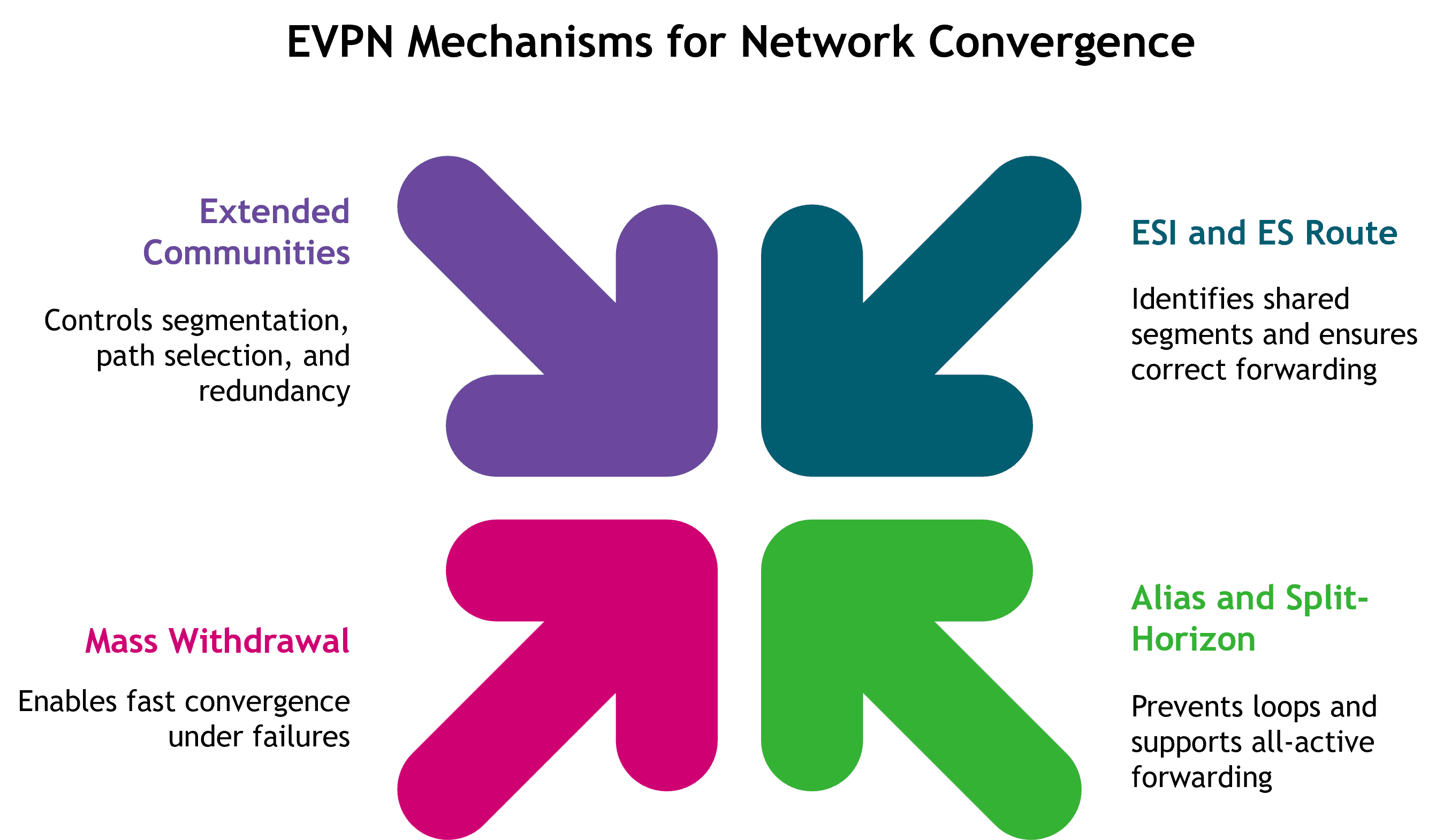
A major strength of EVPN is in how it handles multi-homing — connecting a Customer Edge (CE) device with links to multiple PE devices:
Design Guidelines & Best Practices
The guide doesn’t just explain theory — it offers design recommendations and configuration guidelines for AOS EVPN deployments:
- Underlay / Overlay design decisions (fully routed underlay using OSPF / IS-IS / eBGP) vs partial hybrid models.
- Topology guidance (spine-leaf, scalable Clos fabrics, DCI extension).
- External connectivity considerations (border leaf, VRF import/export, route leakage).
- Configuration examples (underlay OSPF, BGP EVPN, VRF, EBGP, link aggregation, verification commands).
- Verification & operational commands to validate EVPN state, route tables, adjacency, MAC/IP mappings, etc.